
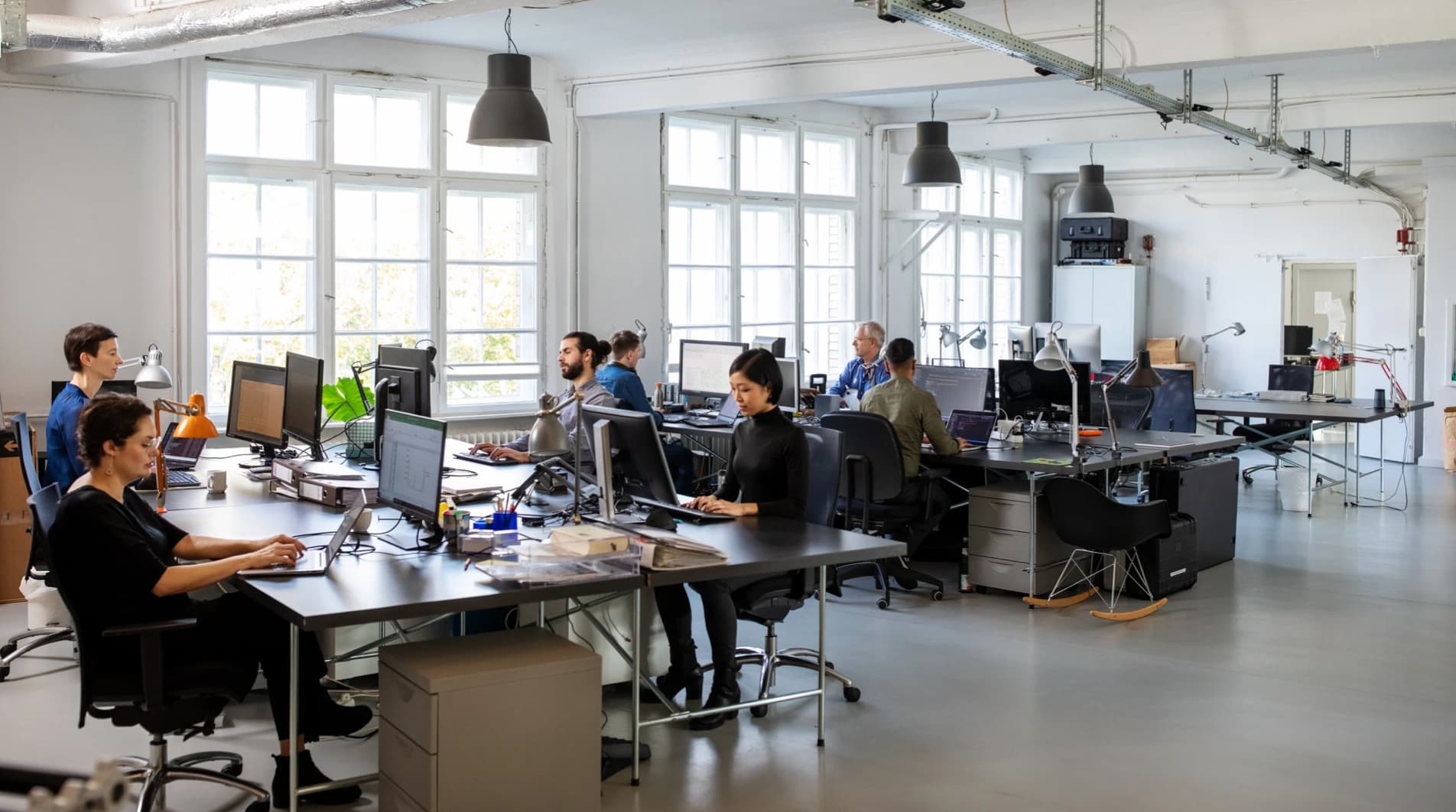
The layout of office desks plays a crucial role in shaping the productivity, efficiency, and collaboration within a workplace. Choosing the right office furniture and arranging it thoughtfully can significantly enhance the workflow and foster a collaborative environment. In this article, we explore various office desk layouts and how they can optimize your business operations.
Open Plan Layout
Open plan layouts are designed to create a sense of openness and facilitate communication among employees. In this setup, office desks are arranged in a large, open space without the use of individual cubicles or private offices. This layout promotes transparency, encourages teamwork, and allows for easy collaboration. Open plan layouts are particularly effective in creative industries where brainstorming and collective problem-solving are essential.
Clustered Layout
Clustered layouts involve grouping office desks into small clusters or pods. Each cluster typically consists of four to six desks arranged to face each other or in a circular formation. This arrangement promotes teamwork within smaller groups while maintaining some degree of privacy and personal space. Clustered layouts are ideal for departments that require frequent collaboration but also need individual focus time.
Row Layout
The row layout, also known as a linear layout, involves arranging office desks in straight lines or rows. This traditional setup is commonly used in many businesses due to its simplicity and efficiency. Row layouts make it easy to organize large numbers of employees in a systematic manner. They are particularly effective in call centers, data entry departments, and other environments where repetitive tasks are performed.
L-Shaped Desk Layout
L-shaped Office Desk Layouts provide ample workspace and flexibility for multitasking. In this setup, each employee’s desk forms an L shape, creating separate zones for different tasks. This layout is beneficial for employees who need extra space for paperwork, multiple monitors, or other office equipment. L-shaped desks can be positioned in various configurations, such as against walls or in the center of the room, to optimize space and workflow.
U-Shaped Desk Layout
U-shaped desk layouts offer an extensive work surface and are ideal for tasks that require multiple resources and equipment. Each U-shaped desk forms a U shape, providing dedicated areas for different activities. This layout is commonly used by executives, managers, and professionals who need to access multiple documents, devices, or tools simultaneously. Incorporating U-shaped desks into your office furniture can enhance productivity by keeping everything within easy reach.
Hot Desking Layout
Hot desking is a flexible office layout where employees do not have assigned desks. Instead, they choose available desks on a first-come, first-served basis. This arrangement promotes a dynamic and flexible work environment, encouraging employees to interact with different team members. Hot desking can also save space and reduce costs by maximizing the use of available office furniture. It is particularly effective in companies with remote workers or employees who frequently travel.
Activity-Based Layout
Activity-based layouts are designed to accommodate various types of work activities within the office. This setup includes different zones for specific tasks, such as quiet areas for focused work, collaborative spaces for team projects, and lounge areas for informal meetings. Office desks are arranged according to the specific needs of each zone. This layout promotes a balanced work environment that supports both individual productivity and team collaboration.
Cubicle Layout
Cubicle layouts involve partitioning the office space into individual workstations using cubicle walls or panels. Each cubicle typically contains a desk, chair, and storage options, providing employees with a private and organized workspace. This layout is suitable for businesses that require a high level of concentration and minimal distractions. Cubicle layouts can enhance privacy and reduce noise, making them ideal for tasks that demand focused attention.
Circular Layout
Circular layouts arrange office desks in a circular or semi-circular formation, promoting equality and open communication among team members. This setup is particularly effective for collaborative projects, meetings, and brainstorming sessions. Circular layouts eliminate hierarchical barriers and encourage a sense of community within the workplace. Incorporating circular desk arrangements into your office furniture can foster a more inclusive and cooperative work environment.
Bench Layout
Bench layouts involve long, continuous desks that accommodate multiple employees in a shared workspace. This setup promotes a sense of unity and collaboration, as employees sit side by side without physical barriers. Bench layouts are ideal for open-plan offices and collaborative environments where teamwork and communication are essential. They also maximize space efficiency and can be easily reconfigured to adapt to changing needs.
Selecting the right Office Desk Layouts is crucial for optimizing workflow and collaboration in your business. By understanding the various layout options and considering the specific needs of your team, you can create a productive and harmonious work environment. Thoughtfully arranged office furniture not only enhances efficiency but also contributes to the overall well-being and satisfaction of your employees.
